

Call NOW - 24/7
Contact

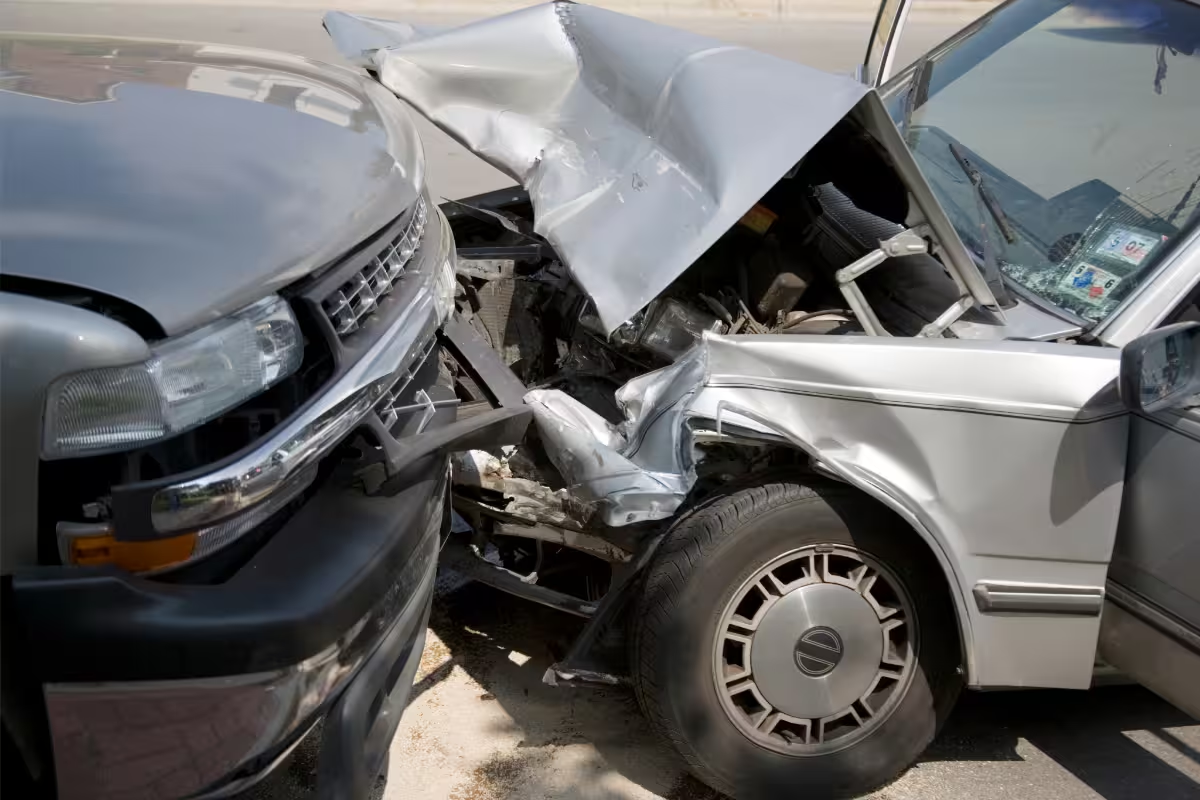

A head-on collision can leave you with serious injuries, ongoing medical needs, and questions about how you will support yourself and your family. If your injuries keep you from working or handling everyday responsibilities, the financial and personal pressure can become difficult to manage. When another driver causes the crash, you may be able to pursue compensation for medical care, lost income, and the other ways the accident has affected your life.




At Sotelo Law Group, attorney Daniel Sotelo and his team take the time to listen, answer your questions, and explain your legal options clearly. We help people injured in Phoenix investigate what caused the collision, deal with insurance companies, and pursue appropriate compensation. Our team is available 24/7 and assists clients in English and Spanish.
Contact Sotelo Law Group today for a free consultation. Before representation begins, we will explain the fee agreement, how case expenses are handled, and what you can expect if you move forward with a claim.





Head-on collisions are especially dangerous because vehicles traveling in opposite directions can strike each other with significant force. The impact may cause a vehicle to stop, spin, roll over, or be pushed into another lane. Even when seat belts and airbags work as intended, drivers and passengers may strike the steering wheel, dashboard, windows, or other parts of the vehicle.
The severity of the injuries may depend on:
These injuries may require emergency treatment, surgery, rehabilitation, physical therapy, or ongoing medical care. They can also affect a person’s ability to work, drive, care for family members, or complete everyday activities. Because some symptoms may develop after the initial shock wears off, seeking prompt medical attention can help identify injuries, begin treatment, and document their connection to the collision.
The force of a head-on collision can injure multiple areas of the body at the same time. Some injuries may heal with treatment and rest, while others can result in lasting pain, disability, or changes to a person’s independence.
Head-on collision injuries may include:
A person may need emergency treatment, surgery, rehabilitation, physical therapy, or ongoing medical care. These injuries can also affect the ability to work, drive, care for family members, or complete everyday activities. Understanding both the immediate and long-term effects of the injuries is important when determining the compensation an injured person may need.
A driver who crosses the center line or enters a roadway in the wrong direction may be responsible for a head-on collision. However, the final positions of the vehicles do not always explain what happened. An investigation may be needed to determine where each vehicle was traveling, what the drivers were doing, and whether another condition contributed to the crash.
Fault can also become disputed. A driver may deny entering opposing traffic, witnesses may provide conflicting accounts, or an insurance company may argue that the injured person contributed to the crash. Evidence that may help clarify responsibility includes:
This evidence may show whether a driver was speeding, distracted, impaired, fatigued, or attempting an unsafe passing maneuver. It may also reveal a mechanical failure or dangerous roadway condition.
Depending on the circumstances, responsibility may extend beyond the driver who entered opposing traffic. Other potentially responsible parties may include:
Identifying every responsible party can help determine which insurance policies and other sources of compensation may be available. A prompt investigation can also help preserve evidence before it is lost or becomes more difficult to obtain.

The effects of a head-on collision can extend well beyond the initial medical bills. An injured person may be able to pursue compensation for both the financial losses caused by the crash and the ways the injuries have affected their health, independence, and quality of life.
Compensation for financial losses may include:
Medical records, employment documents, bills, receipts, and expert evaluations may help establish the value of these losses.
Some effects of an injury do not have a specific price or receipt. Compensation may also account for:
The compensation available will depend on the severity of the injuries, their long-term effects, the evidence supporting the claim, the available insurance coverage, and other circumstances surrounding the collision.
If you are able, the following steps may help protect your health and preserve information that could support your claim:
If your injuries prevented you from gathering information, other evidence may still be available. Accident reports, witness statements, video recordings, and vehicle data may help establish what happened.
Arizona law can affect both whether you may recover compensation and how long you have to take legal action. Because the rules and deadlines may vary based on the circumstances, it is important to have your specific situation reviewed promptly.
Being partly responsible for a head-on collision does not necessarily prevent you from recovering compensation in Arizona. If you are found to share responsibility, your compensation may be reduced according to your percentage of fault.
For example, an insurance company may argue that you were speeding, distracted, or could have reacted differently before the collision. Evidence from the scene can help determine whether that allegation is supported and whether the insurer is assigning you more responsibility than the facts justify.
Many Arizona personal injury lawsuits must be filed within two years after the cause of action accrues. However, different deadlines may apply in certain circumstances.
If a government entity or public employee may be responsible, such as when an unsafe roadway condition or inadequate signage contributed to the crash, a formal notice of claim may be required within 180 days. A lawsuit against a public entity or employee generally must be filed within one year.
Exceptions and special rules can affect when these time periods begin and how they apply. Having the deadline reviewed early can help protect your ability to pursue compensation.
After a serious collision, managing medical treatment, insurance questions, and financial pressure can feel overwhelming. Sotelo Law Group handles the legal process while helping clients understand what is happening throughout their claim.
Our team can gather available evidence, determine why the collision occurred, and identify everyone who may be responsible. We also collect medical records, employment information, and other documents showing how the injuries have affected your health, income, independence, and daily life.
Sotelo Law Group can communicate with insurers, evaluate available coverage, respond to disputed claims, and negotiate for appropriate compensation. When necessary, our team can prepare the case for litigation.
Daniel Sotelo and his team take the time to listen, answer questions, and explain your options clearly. We assist clients in English and Spanish and are available 24/7, helping each client feel heard, respected, and informed.
If you were seriously injured or lost a loved one in a head-on collision, you do not have to face the insurance and legal process alone. Sotelo Law Group can investigate what happened, preserve important evidence, and help you pursue compensation for the full impact the crash has had on your life and family.
Attorney Daniel Sotelo and his team provide personal guidance in English and Spanish and are available 24/7. Contact Sotelo Law Group for a free consultation to discuss the collision, ask questions, and learn about your options for moving forward.